
Customized hydraulic fixture services
Precionn has over 15 years of experience in designing and manufacturing hydraulic fixtures, and can meet your hydraulic fixture needs for various product processing.
- Professional hydraulic fixture design engineer
- 15+ years of professional fixture manufacturing experience
- Compared to the global industry average, hydraulic fixtures save more than 30% in costs.
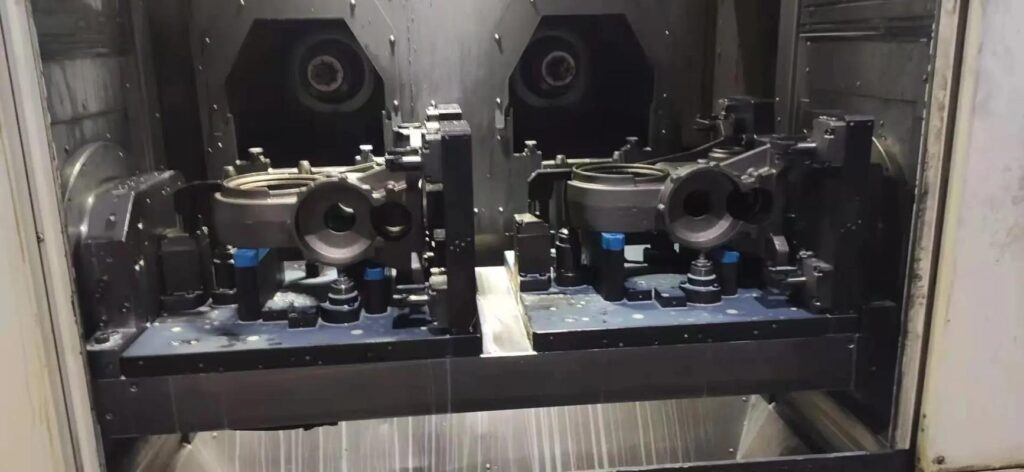
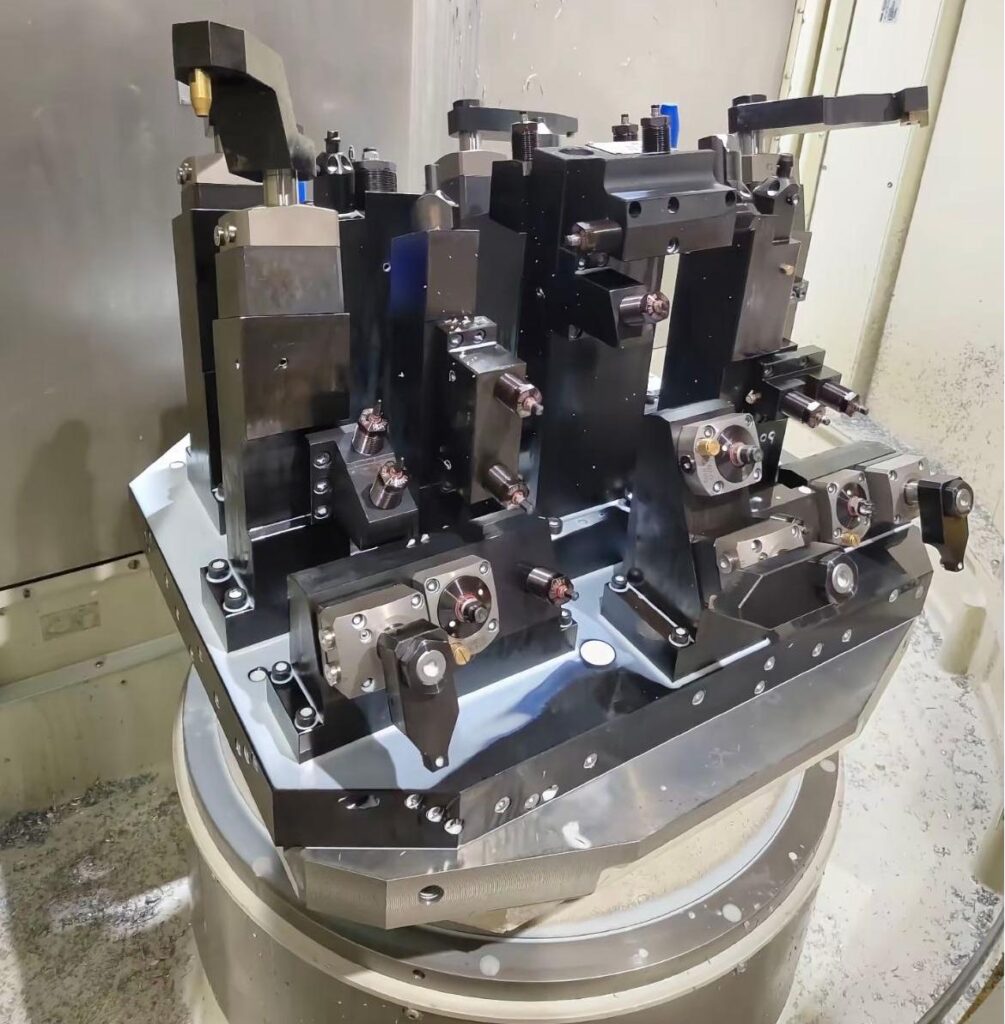
What is a hydraulic fixture?
Hydraulic fixtures are devices designed and manufactured using the principles of hydraulic systems to fix and support workpieces. They are mainly used in precision machining, assembly, and testing, achieving automated operation through hydraulic pressure and providing powerful support and clamping forces. Hydraulic fixtures are characterized by high efficiency, precision, and stability, and are widely used in industries such as machining, automotive manufacturing, and aerospace.
Hydraulic fixture design demands high standards, requiring consideration of factors such as workpiece size, shape, material, and machining processes to ensure optimal performance. Precionn has professional hydraulic fixture design engineers with extensive experience, particularly in designing hydraulic fixtures for automotive parts processing.
Components of a hydraulic fixture
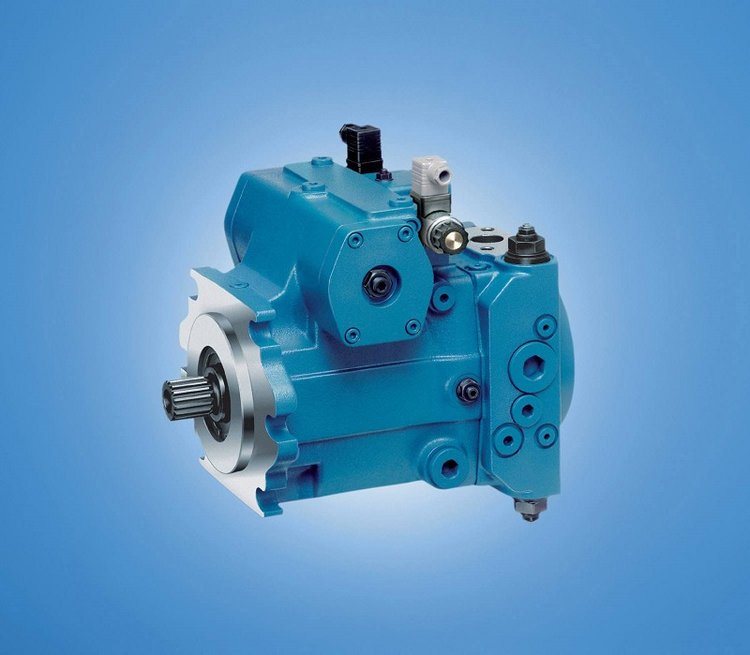
Hydraulic system
This includes hydraulic pumps, cylinders, hydraulic valves, pipelines, etc., which provide hydraulic power to hydraulic fixtures.
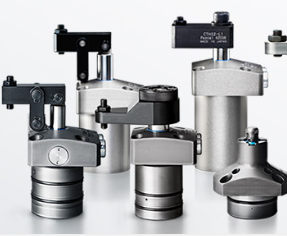
hydraulic actuators
It mainly consists of hydraulic cylinders (oil cylinders), which use the pressure of hydraulic oil to drive the piston to move, thereby achieving actions such as clamping/releasing, lifting/lowering, and are components that directly act on the workpiece.
Hydraulic fixture body
Customized mechanical structures based on the shape of the workpiece, including locating pins, support blocks, clamping arms, etc., are used to ensure the precise positioning of the workpiece and transmit the force of the hydraulic cylinder.
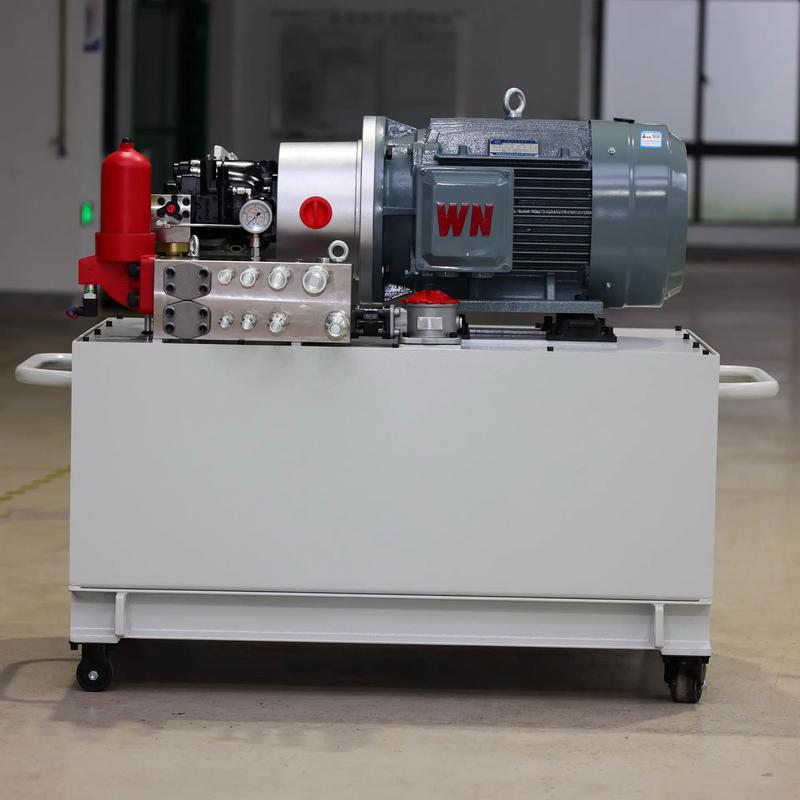
Hydraulic auxiliary components and control systems
Hydraulic auxiliary components: hydraulic hoses, connectors, seals, pressure gauges, etc.
Control system: used to regulate and control the pressure, flow rate, and clamping time of the hydraulic system to ensure the accuracy and efficiency of the fixture.
Advantages of hydraulic fixtures
The core advantages of hydraulic fixtures lie in three dimensions: force efficiency, precision, and automation adaptability. Compared with manual and pneumatic fixtures, their advantages are particularly prominent in heavy-duty machining and high-precision assembly scenarios.
- High clamping force and stable output
- Precise and controllable movements with high repeatability
- Highly compatible with automation, improving production efficiency
- Adapt to complex workpiece shapes
- High stability and high precision
- The hydraulic fluid in a hydraulic system reduces direct contact between metal parts, which helps reduce wear and extend equipment life.
- Hydraulic fixtures are particularly well-suited for large-scale automated production lines, especially in precision machining and repetitive assembly processes. By optimizing the hydraulic control system, efficient production and rapid workpiece changeover can be achieved, significantly improving production line efficiency.
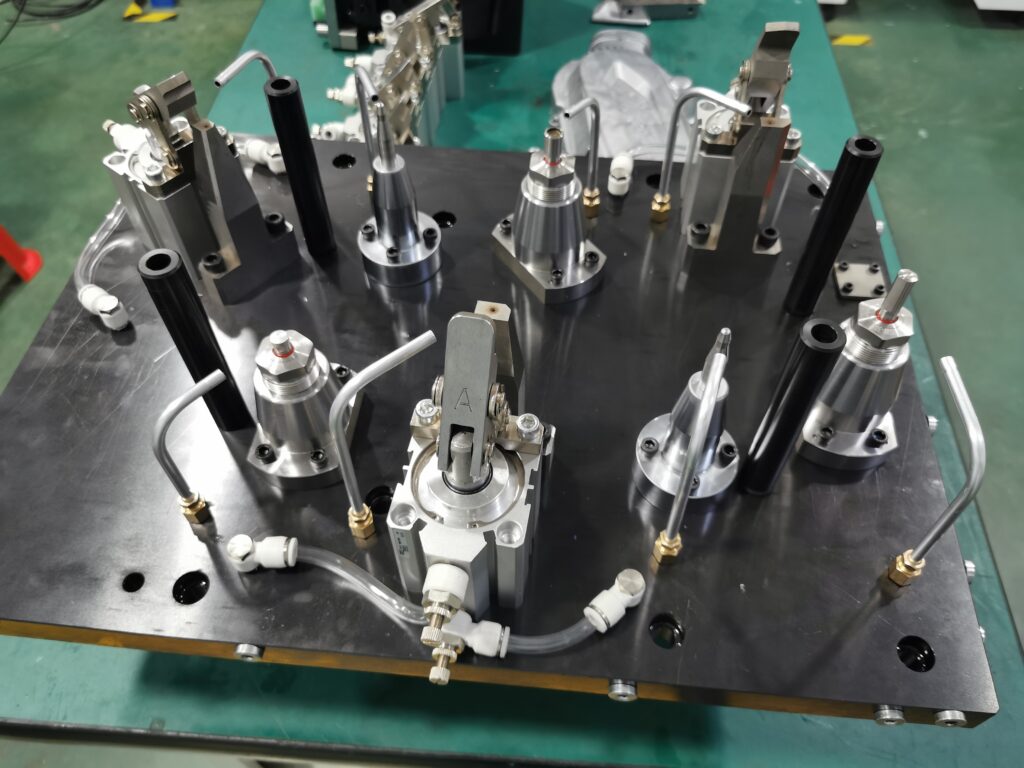
Application of hydraulic fixtures
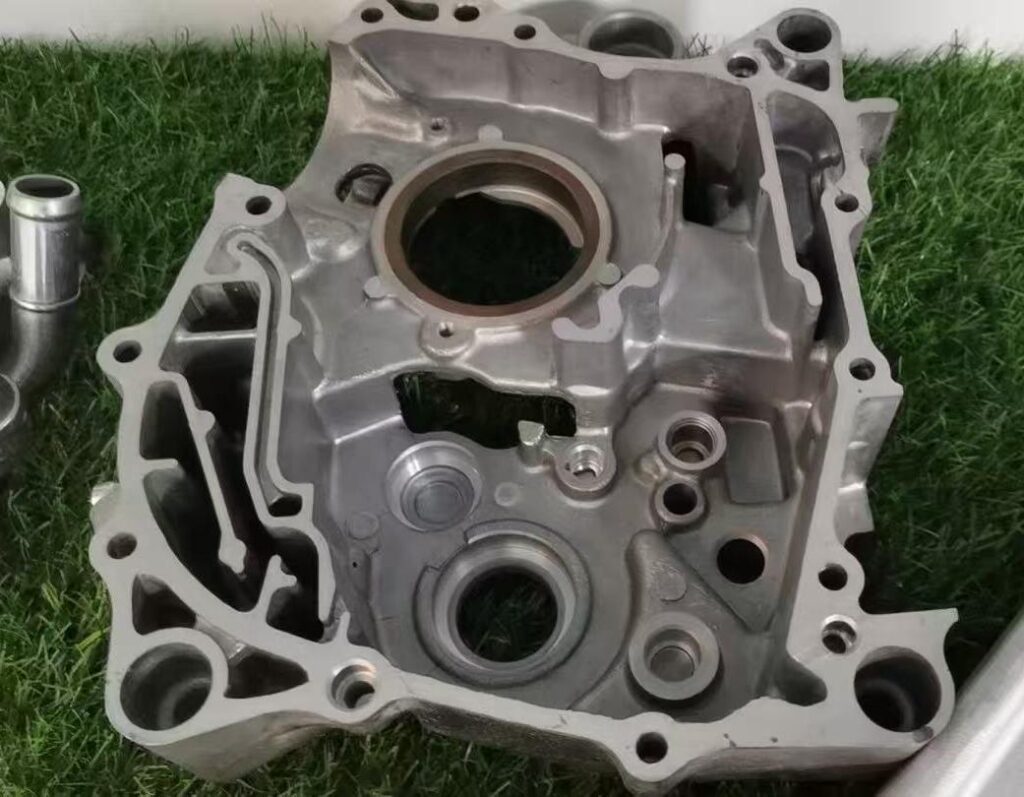
Mechanical processing field
- Milling/drilling of automotive engine blocks and cylinder heads: Multiple workpieces are simultaneously positioned and clamped using multi-station hydraulic fixtures to ensure the coaxiality and spacing accuracy of the machined holes, and the clamping force is stable to avoid dimensional deviations caused by machining vibration.
- Rough machining of large mold steel billets: Hydraulic fixtures can provide tens of tons of clamping force to firmly fix steel billets weighing several tons, meeting the clamping requirements of heavy cutting.
- Machining of thin-walled precision parts: Utilizing the uniform force characteristics of hydraulic fixtures to avoid stress concentration caused by manual clamping, which can lead to workpiece deformation, such as thin-walled aluminum alloy components for aerospace applications.
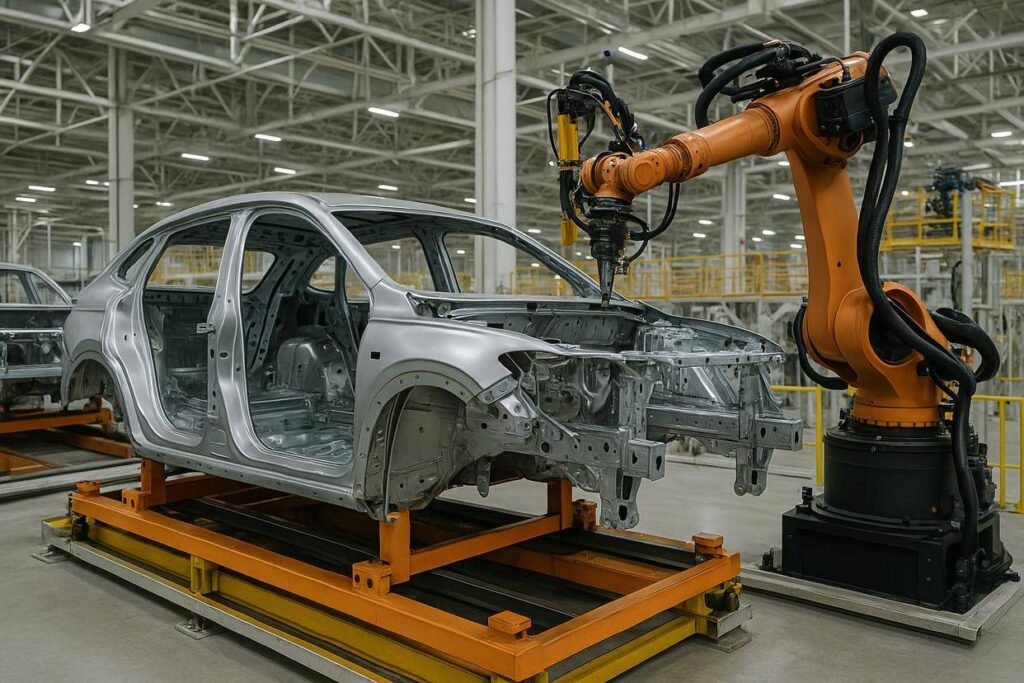
Automobile manufacturing and assembly line
- Car body welding fixture: The car body is welded from hundreds of stamped parts. The hydraulic fixture can simultaneously and accurately position and clamp multiple stamped parts to ensure that the geometric dimensions of the car body after welding meet the design requirements and are suitable for subsequent final assembly processes.
- Chassis component assembly: During the assembly of heavy components such as the rear axle and suspension system, hydraulic jigs can lift and position the components, assisting workers in tightening bolts and improving assembly efficiency and consistency.
- New energy battery pack assembly: The battery pack shell is large in size and heavy in weight. Hydraulic jigs are used for shell positioning and clamping and fixing of the cell modules to prevent cell displacement during assembly.

Aerospace and military manufacturing
The workpieces in this field are mostly high-strength alloys and irregularly shaped structures, and the precision requirements are at the micron level. The high precision and stability of hydraulic fixtures are the core compatibility points.
- Aircraft landing gear component machining: The landing gear is made of high-strength steel or titanium alloy and must withstand strong cutting forces during machining. Hydraulic fixtures provide stable clamping force to ensure the flatness and dimensional accuracy of the machined surface.
- Missile body/satellite structural component clamping: These workpieces have complex shapes, thin walls and are easily deformed. Hydraulic fixtures clamp them evenly at multiple points to avoid clamping deformation that could affect flight performance.
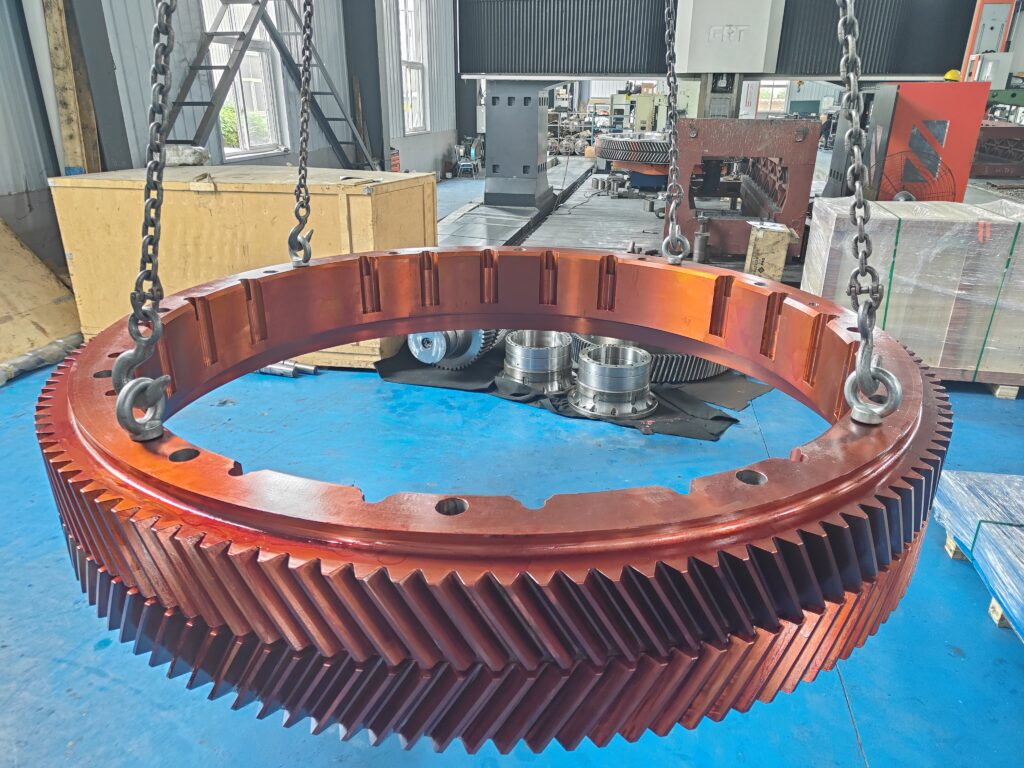
Heavy equipment and engineering machinery manufacturing
Hydraulic fixtures solve the clamping problem for components of large equipment such as excavators, cranes, and tunnel boring machines.
- Welding fixtures for excavator booms and sticks: The workpieces can be several meters long and weigh over a ton. The hydraulic fixture uses multiple cylinders to clamp the workpieces synchronously, ensuring the straightness of the workpieces during welding.
- Machining of tunnel boring machine cutterhead components: The cutterhead has a large diameter and complex structure. Hydraulic fixtures are used for positioning during segmented machining to ensure the overall accuracy of each segment after splicing.
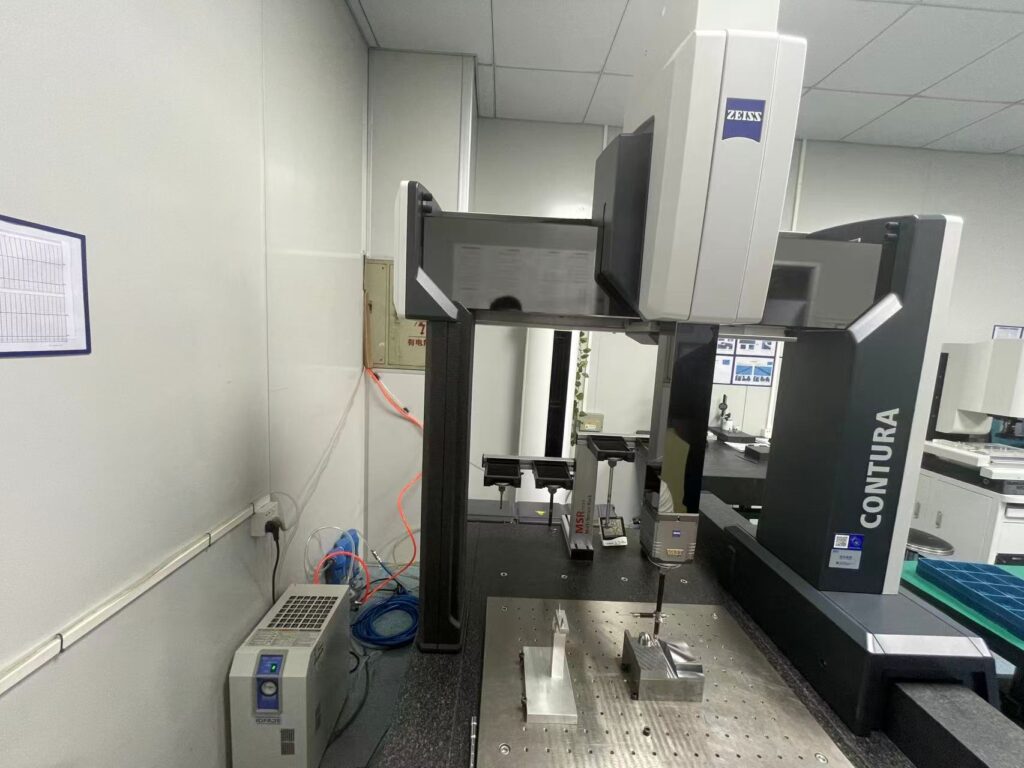
Testing and experimental equipment
In workpiece quality inspection and performance testing, hydraulic fixtures are used to accurately position the workpiece and eliminate human positioning errors.
- Workpiece dimensional inspection fixture: Next to the coordinate measuring machine, the hydraulic fixture fixes the workpiece in a standard position to ensure the repeatability and accuracy of the measurement data.
- Material strength testing fixtures: In tensile and compression tests, hydraulic fixtures clamp the specimens, providing a stable clamping force to prevent the specimens from slipping or deviating from their fracture position.
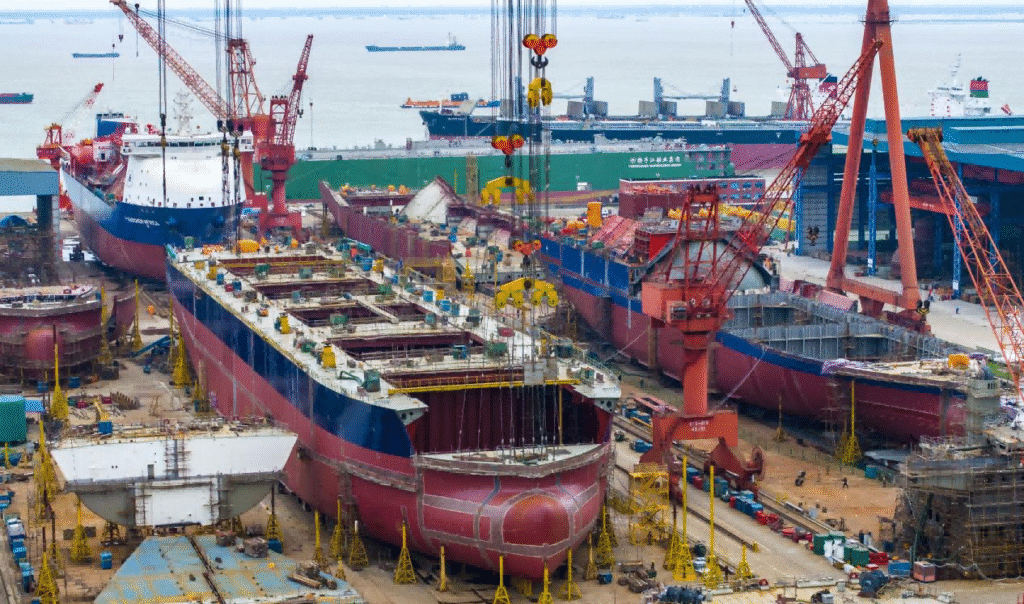
Shipbuilding and Rail Transportation
Hydraulic fixtures also have important applications in shipbuilding, especially in the assembly and welding of large components.
- Hull assembly: Hydraulic fixtures are used for the precise docking and positioning of large-sized hull components to ensure proper welding of each component.
- Ship parts processing: Ship parts often require complex processing techniques, and hydraulic fixtures can provide sufficient clamping force to ensure processing accuracy.
- Rail Transit: Processing and assembly of aluminum alloy profiles for high-speed train carriages, ensuring the straightness of the profiles and assembly precision.
Why choose Precionn for hydraulic fixtures?
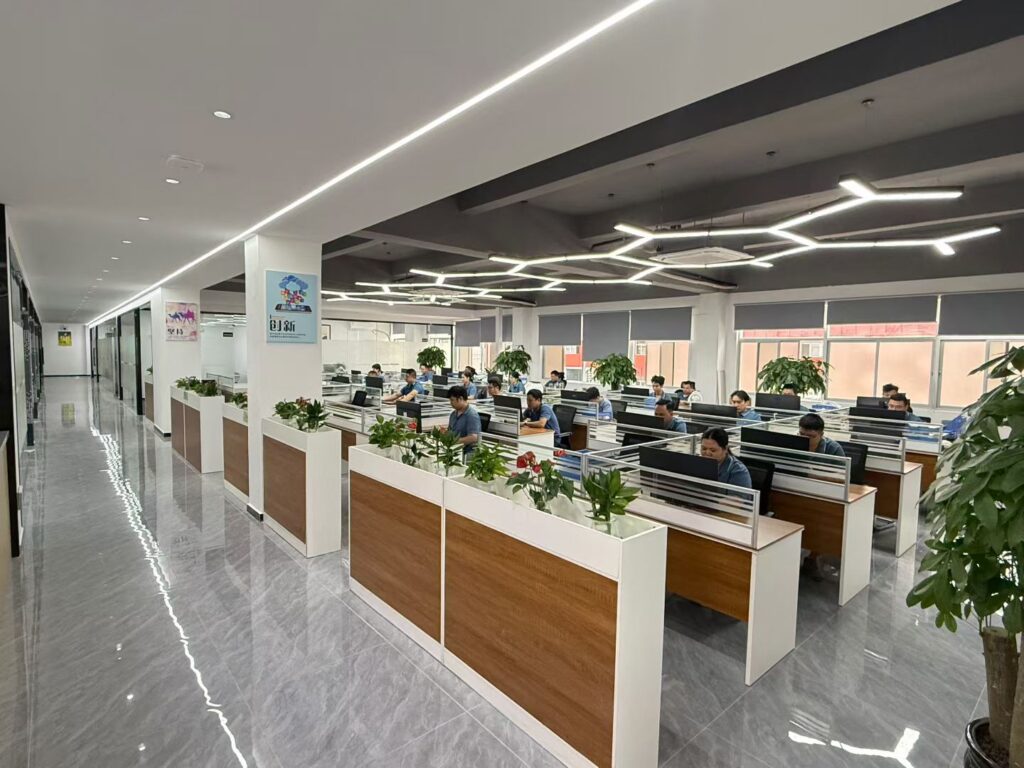
Hydraulic fixture design
Precionn has a professional hydraulic fixture design department with 5 professional design engineers and 20 years of fixture design experience. You only need to provide a 3D drawing, and we can provide you with a perfect fixture solution based on the drawing.
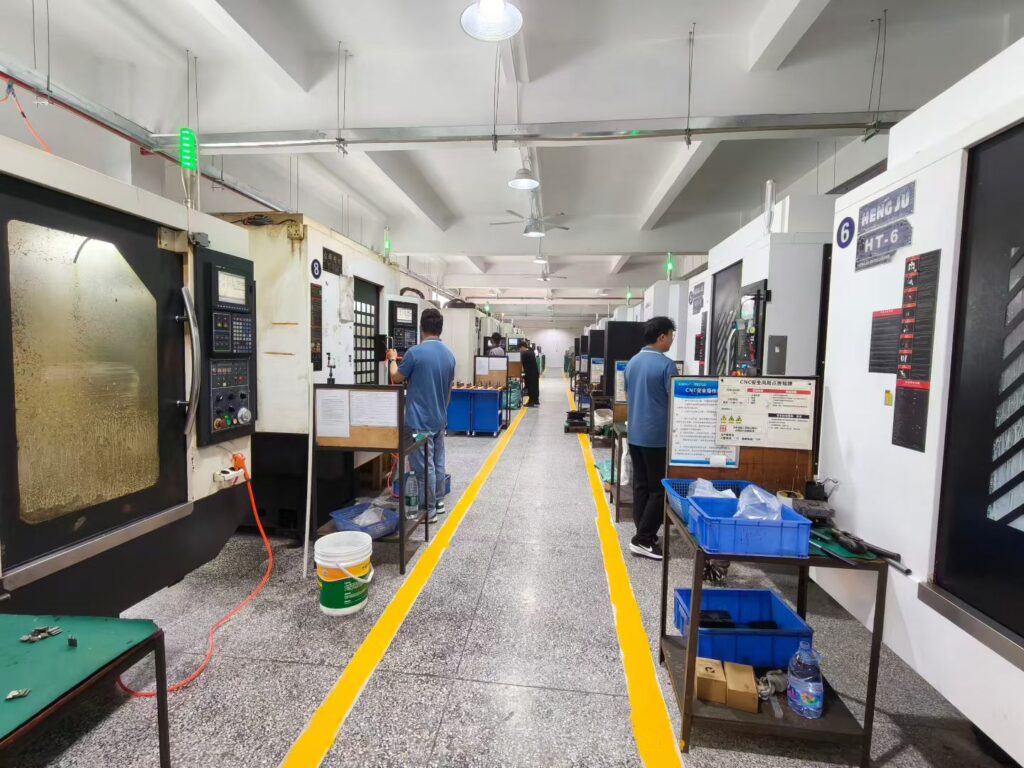
Hydraulic fixture manufacturing
We have over 50 professional fixture manufacturers and precision manufacturing equipment, including CNC machining equipment, wire EDM, surface grinding equipment, and electrical discharge machining equipment. We also have complete hydraulic station and hydraulic cylinder supporting resources, ensuring short delivery times and high cost-effectiveness.
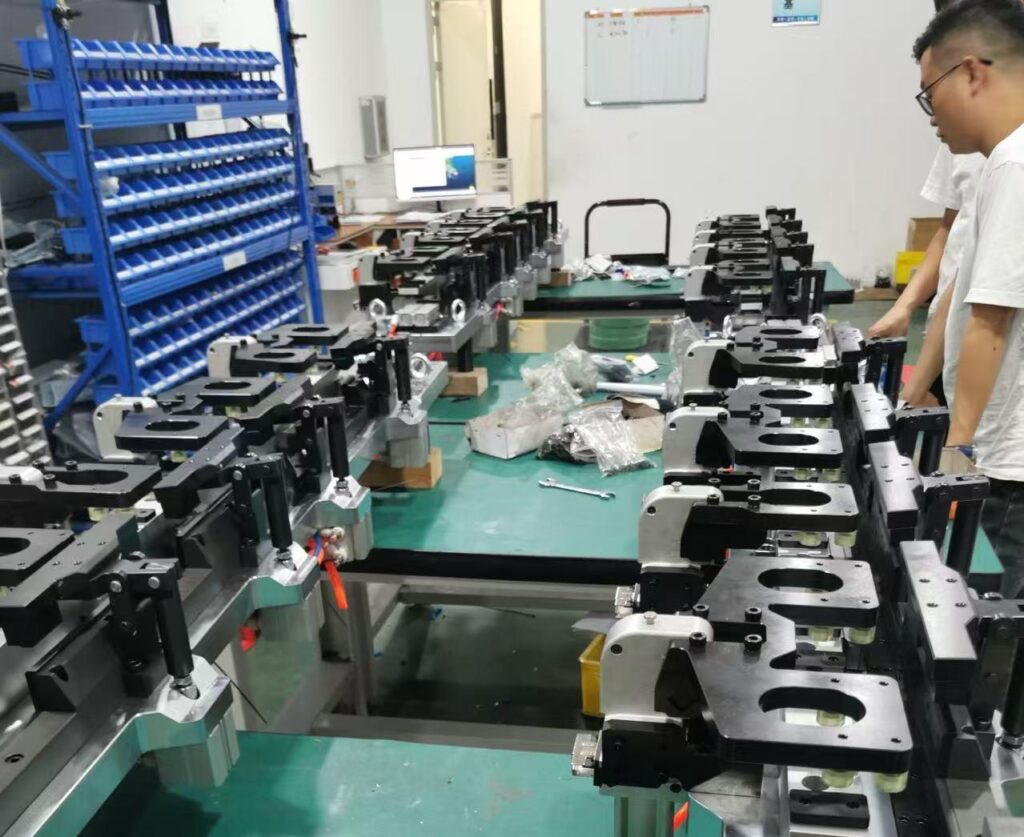
Hydraulic fixture assembly and testing
Precionn has over 10 professional hydraulic fixture assembly staff with more than 20 years of experience. For each hydraulic fixture, we use globally renowned brands for the hydraulic cylinders and related components, such as seals, hydraulic lines, and pumps, ensuring stable operating pressure and preventing leaks. Every fixture undergoes professional hydraulic testing and dimensional inspection before shipment.
Hydraulic fixtures FAQS
Hydraulic fixtures are tooling fixtures powered by hydraulic systems. They are mainly used in industrial production for positioning, clamping, supporting, or driving workpieces. Compared with traditional manual and pneumatic fixtures, they have greater clamping force, more stable pressure output, and more precise motion control.
The core difference between hydraulic fixtures and pneumatic fixtures lies in their power source characteristics, force output capability, and control precision. They are suited to different production scenarios. For heavy workpieces with high cutting forces (such as heavy steel structures and automotive chassis), hydraulic fixtures are preferred to ensure clamping stability and machining accuracy. For lightweight workpieces with fast production cycles (such as 3C products and small plastic parts), pneumatic fixtures are preferred, balancing efficiency and cost. For precision machining scenarios requiring high positioning accuracy, only hydraulic fixtures are suitable; for simple clamping scenarios without precision requirements, pneumatic fixtures offer better cost-effectiveness.
Precionn has five professional hydraulic fixture design engineers with over 20 years of design experience, particularly in the design of hydraulic fixtures for automotive engine and transmission housing parts.
Precionn estimates that designing a hydraulic fixture will take one week, manufacturing will take two to three weeks, and assembly will take three days. Therefore, the total time for completing a hydraulic fixture is estimated to be around one month.