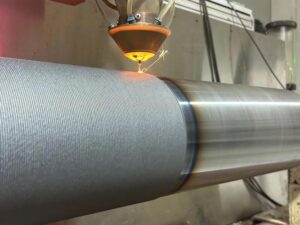

In today’s fast-moving manufacturing world, accuracy and efficiency are no longer optional — they’re expected. One of the technologies driving this new standard is CNC milling, a computer-controlled machining process that shapes metal and plastic into precise, high-quality components used across countless industries.
But what exactly is CNC milling? How does it work, and why has it become so essential to modern manufacturing? Let’s take a closer look.
What Is CNC Milling?

CNC milling (short for Computer Numerical Control milling) is a subtractive manufacturing process that uses computer programs to control cutting tools. Unlike manual machining, where an operator moves tools by hand, CNC milling machines follow exact digital instructions to remove material layer by layer from a solid block — usually metal or plastic.
The result? Complex parts with remarkable precision, repeatability, and surface finish.
How CNC Milling Works
The Digital-to-Physical Process
The CNC milling process begins long before a machine ever touches the material. Engineers first create a 3D CAD model of the part, which is then converted into G-code, a CNC program that tells the milling machine how to move — where to cut, how fast, and to what depth.
Typical CNC Milling Workflow
- Design the part using CAD software
- Generate toolpaths with CAM software
- Set up the machine and secure the workpiece
- Perform the milling operation following programmed instructions
- Inspect and finish the final component
Modern CNC milling machines can operate on three, four, or five axes, enabling the creation of complex geometries that would be nearly impossible with manual machining.
Advantages of CNC Milling
High Precision and Repeatability
CNC milling achieves tight tolerances — often within microns — ideal for industries like aerospace and medical manufacturing. Once a design is programmed, it can be reproduced perfectly hundreds or thousands of times.
Efficiency and Automation
Because CNC machines operate automatically under computer control, production runs faster and with fewer errors than traditional methods.
Material and Design Flexibility
From aluminum, stainless steel, and titanium to engineering plastics, CNC milling adapts to a wide range of materials and part geometries.
Capability for Complex Designs
5-axis CNC milling makes it possible to create intricate contours, undercuts, and surfaces that would otherwise require multiple setups.
Applications of CNC Milling Across Industries

Aerospace and Defense
CNC milling produces lightweight yet durable parts such as turbine blades, engine mounts, and landing gear components.
Automotive Manufacturing
Used to produce precision components like gear housings, engine blocks, and custom prototypes.
Medical Device Production
Essential for creating surgical tools, orthopedic implants, and custom prosthetics requiring perfect accuracy.
Consumer Electronics and Tooling
Used for enclosures, molds, and fixtures in consumer electronics and mold-making industries.
Different Types of CNC Milling Processes
Face Milling
Removes material from the top surface of a workpiece, leaving a smooth, flat finish.
Peripheral and Profile Milling
Cuts along the outer edges or contours of a part for shaping and detailing.
Slot and Pocket Milling
Creates grooves, keyways, and pockets for mechanical or assembly functions.
Multi-Axis and 5-Axis Milling
Allows machining on multiple faces of a part simultaneously, improving precision and reducing setup time.
High-Speed Milling
Optimizes spindle speed and feed rate for lightweight materials and fine finishes.
Choosing the Right Material for CNC Milling
Common CNC Milling Materials
- Aluminum – Lightweight, corrosion-resistant, and easy to machine
- Stainless Steel – Strong and durable, perfect for medical and food-grade parts
- Brass and Copper – Excellent for electrical conductivity and decorative elements
- Titanium – Ideal for aerospace and medical applications
- Plastics (ABS, POM, Nylon, PEEK) – Great for prototypes and lightweight components
Surface Finishing Options
To enhance performance and appearance, CNC parts can be treated with:
How to Choose a Reliable CNC Milling Service Provider
Check Technical Capabilities
Ensure the supplier offers multi-axis machining, CNC prototyping, and advanced quality control.
Review Quality Standards
Look for ISO-certified facilities and in-house inspection systems like CMM (Coordinate Measuring Machines).
Material and Design Expertise
A good CNC machining partner understands material behavior and can suggest cost-effective solutions.
Communication and Support
Transparent project updates and technical guidance show a service provider’s reliability.
Lead Time and Pricing
Competitive pricing is important, but consistent accuracy and fast turnaround matter most.
Tip: A trusted partner not only delivers parts but also helps you optimize designs for manufacturability.
The Future of CNC Milling: Automation and Smart Manufacturing
AI and Machine Learning
Emerging technologies are enabling AI-driven CAM programming, which reduces setup time and minimizes tool wear.
Robotics and Automation
Robotic arms and pallet changers allow continuous, unmanned production — improving efficiency and consistency.
Digital Twins and Virtual Simulation
Manufacturers are increasingly using digital twins to simulate machining processes before production, saving time and reducing waste.
Sustainability and Green Machining
Future CNC operations focus on energy efficiency, coolant recycling, and eco-friendly materials to reduce environmental impact.
Final Thoughts
CNC milling has become the backbone of precision manufacturing. Whether you’re developing prototypes or scaling up production, it offers the accuracy, reliability, and flexibility required to stay competitive.
If you’re searching for custom CNC milling services or precision metal machining that deliver consistent quality and fast lead times, partnering with an experienced manufacturer can make all the difference.