If you work in manufacturing, prototyping, or even woodworking, you’ve probably heard of CNC routers and CNC mills. Both machines are staples in modern workshops — they use computer-controlled motion to cut, carve, or shape materials with incredible accuracy.
However, many people new to CNC machining often ask: “Aren’t they basically the same thing?” While they share similar principles, the differences between a CNC router and a CNC mill can drastically affect the quality, speed, and cost of your work.
In this article, we’ll break down how each machine works, where they excel, and which one fits your project best.
What Is a CNC Router?

A CNC router is a computer-controlled cutting machine designed to move quickly and cover large surface areas. It operates along three main axes (X, Y, and Z), using a high-speed spindle to cut and shape materials.
CNC routers are typically used for softer materials such as wood, plastics, foam, and occasionally soft metals like aluminum. They’re widely used in industries like:
- Woodworking and cabinetry
- Sign making and advertising
- Furniture production
- Prototyping and model fabrication
The main advantage of a CNC router is speed. Because of its lightweight frame and high spindle RPM, it can remove material quickly and efficiently — perfect for large sheets or repetitive parts.
However, routers are not built for deep cuts or extremely hard materials. The trade-off for speed is reduced rigidity, which limits their ability to handle heavy-duty machining.
What Is a CNC Mill?

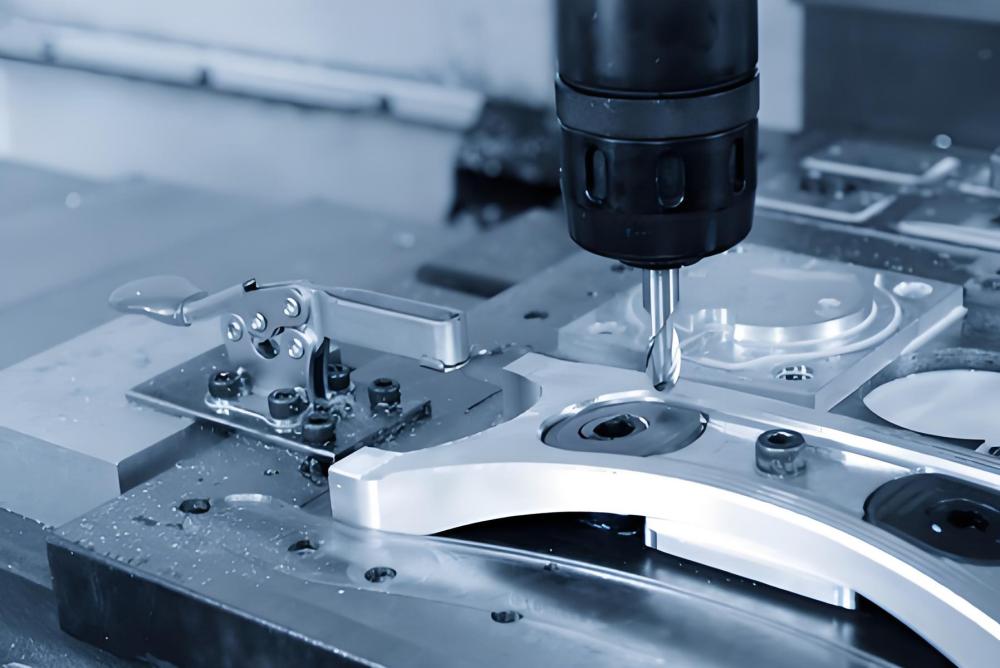
A CNC milling machine, on the other hand, is built for power, stability, and precision. Unlike routers, CNC mills use a heavier, more rigid frame that allows for deep cuts into hard materials like steel, titanium, or cast iron.
A typical CNC mill includes features such as:
- High-torque spindles for tough materials
- Automatic tool changers
- Coolant systems for heat management
- Enclosed work areas to contain chips and coolant
Because of this robust design, CNC mills are common in industries such as:
- Aerospace and defense
- Automotive manufacturing
- Medical device production
- Precision engineering and tooling
Mills are slower than routers, but they offer far greater dimensional accuracy and surface finish quality, making them essential for machining parts with tight tolerances.
Key Differences Between CNC Router and CNC Mill
While routers and mills both use computer-controlled cutting paths, their differences lie in structure, purpose, and performance.
| Feature | CNC Router | CNC Mill |
| Machine Frame | Lightweight, open gantry | Heavy, rigid enclosure |
| Spindle Speed | High RPM, low torque | Lower RPM, high torque |
| Cutting Depth | Shallow cuts | Deep, precise cuts |
| Material Suitability | Wood, plastics, foam, soft metals | Steel, titanium, alloys |
| Work Area | Large bed for flat sheets | Smaller area, vertical work |
| Accuracy | Good for general use | Excellent for tight tolerances |
| Cost | More affordable | Higher investment and maintenance |
In short:
- CNC routers are built for speed and volume — great for cutting large, soft materials.
- CNC mills are built for precision and power — ideal for hard metals and detailed machining.
Pros and Cons of Each Machine
CNC Router Advantages
- Faster cutting speeds
- Large working area for full sheets
- Lower upfront and operating costs
- Easier to program for simple shapes
CNC Router Limitations
- Limited cutting depth and rigidity
- Less accurate for metal parts
- Not ideal for heavy or dense materials
CNC Mill Advantages
- Handles hard metals with ease
- Excellent precision and repeatability
- Superior surface finish and durability
- Suitable for complex geometries and tooling
CNC Mill Limitations
- Higher cost and maintenance
- Smaller work envelope
- Slower machining on soft materials
Which One Should You Choose?
Choosing between a CNC router and a CNC mill depends on what you make most often. Here’s how to decide:
| If You Work With… | Best Choice |
| Wood, plastic, foam | CNC Router |
| Steel, titanium, or alloys | CNC Mill |
| Prototypes and models | CNC Router |
| Precision-engineered parts | CNC Mill |
| High-speed production | CNC Router |
| Tight tolerance applications | CNC Mill |
For hobbyists or small workshops, a CNC router is usually the best starting point — affordable, versatile, and easy to use.
For professional machinists or manufacturers, a CNC mill is the better investment — built for power, accuracy, and long-term performance.
Real-World Examples
- CNC Router Applications:
- Cutting wooden furniture panels
- Engraving signage and logos
- Machining aluminum sheet enclosures
- Making composite molds for boats or aircraft interiors
- CNC Mill Applications:
- Machining precision engine components
- Creating molds, dies, and fixtures
- Cutting metal prototypes for automotive or aerospace use
- Producing parts that demand ±0.001” tolerances
In other words: routers are the go-to for creative and large-scale production, while mills dominate when accuracy and strength matter most.
Future Trends in CNC Routing and Milling
Modern machining technology continues to blur the line between routers and mills.
- Hybrid CNC systems now combine high-speed routing with milling precision.
- 5-axis CNC machines offer unmatched flexibility for complex surfaces.
- AI-driven CAM software automatically adjusts feeds and speeds for material type.
- Automation and robotics make both machines more efficient and consistent.
As these innovations evolve, the choice between a router and a mill becomes less about limits — and more about finding the right tool for your specific workflow.
Conclusion
Both CNC routers and CNC mills are powerful tools that have reshaped modern manufacturing.
If you need speed, large work areas, and versatility, a CNC router will serve you well. If your projects demand tight tolerances, hard materials, and precision, a CNC mill is the clear winner.
Understanding these differences helps you make a smarter investment — one that matches your production goals, materials, and budget.
Whether you’re cutting wood, aluminum, or hardened steel, the right CNC machine will determine not just how fast you work, but how accurately you can bring your designs to life.