
Aluminum bronze is a high-performance alloy celebrated for its unique blend of strength, corrosion resistance, and durability—making it a staple in industries from marine engineering to aerospace. Whether you’re sourcing materials for high-stress components or exploring durable alloys for harsh environments, understanding aluminum bronze’s composition, properties, and applications is key. This guide breaks down everything you need to know about this versatile material.
What is Aluminum Bronze?
Aluminum bronze is a copper-based alloy distinguished by its primary alloying element: aluminum. Unlike traditional bronze (which often uses tin), aluminum bronze combines copper with aluminum (and trace elements like iron, nickel, or manganese) to enhance mechanical strength, corrosion resistance, and wear performance.
The magic of aluminum bronze lies in its balance of copper’s natural ductility and aluminum’s reinforcing properties. Copper ensures the alloy remains malleable and electrically conductive, while aluminum boosts its tensile strength and resistance to corrosion—especially in aggressive environments like seawater or high temperatures. This makes it ideal for applications where both durability and performance are non-negotiable.
Chemical Composition of Aluminum Bronze
Aluminum bronze’s composition varies by grade, but its core elements are consistent. Here’s a breakdown of its key components:
- Copper (Cu): 85–95% (the base metal, providing ductility and conductivity).
- Aluminum (Al): 5–12% (the primary alloying element, enhancing strength and corrosion resistance).
- Iron (Fe): 1–6% (improves wear resistance and structural stability).
- Nickel (Ni): 1–5% (adds toughness, especially in high-impact applications).
- Manganese (Mn): 1–3% (boosts corrosion resistance in acidic or salty environments).
- Trace elements: Silicon (up to 1%, improves casting fluidity) and zinc (traces, enhances corrosion resistance).
These elements work together to tailor the alloy’s properties—whether prioritizing strength, flexibility, or resistance to harsh conditions.
Properties of Aluminum Bronze: Physical & Mechanical
Aluminum bronze’s popularity stems from its exceptional properties, which make it suitable for demanding applications. Let’s break them down:
Physical Properties
- Density: 7.4–8.7 g/cm³ (similar to other copper alloys, balancing weight and strength).
- Color: A distinct golden-yellow hue, making it visually distinguishable from other bronzes.
- Thermal conductivity: Moderate (lower than pure copper but sufficient for heat-dissipation needs in most industrial parts).
- Electrical conductivity: Decent (not as high as pure copper, but adequate for applications where mechanical strength matters more than conductivity).
- Corrosion resistance: Exceptional—especially in seawater, salt spray, and industrial chemicals. This makes it a top choice for marine and offshore use.
Mechanical Properties
- Tensile strength: 550–1,200 MPa (stronger than brass or pure copper, ideal for high-stress components).
- Hardness: Up to 230 BHN (Brinell Hardness Number), enhanced by iron and nickel additions.
- Ductility: Maintains good flexibility, allowing it to be formed into complex shapes (e.g., gears, valves).
- Wear resistance: Excellent for parts exposed to friction or repeated loading (e.g., bearings, bushings).
- Fatigue resistance: Withstands cyclic stress better than many alloys, making it reliable for long-term use in machinery.
What Are the Types of Aluminum Bronze Grades?
Aluminum bronze comes in various grades, each designed to meet specific performance needs. These grades are classified based on their composition and intended applications. Below are some of the most common types:
Wrought Aluminum Bronze
Wrought aluminum bronze alloys, such as C60800 and C61400, are processed through rolling, forging, or extrusion. These grades are known for their high strength and excellent corrosion resistance, making them ideal for sheet, plate, and tube forms.
C60800
Contains about 5% aluminum, offering good formability and corrosion resistance for marine fittings.
C61400
With 7% aluminum and added iron, this grade is stronger and used in pump components and valve fittings.
Cast Aluminum Bronze
Cast aluminum bronze, such as C95200 and C95400, is produced through casting processes, making it suitable for complex shapes like gears and bushings.
C95200
Contains 9% aluminum and 2% iron, known for its strength and wear resistance in heavy machinery.
C95400
A popular grade with 10% aluminum, offering a balance of strength, hardness, and corrosion resistance.
C95500
Includes nickel for enhanced toughness, often used in high-stress applications like propeller shafts.
Nickel-Aluminum Bronze
Nickel-aluminum bronze, such as C95800, incorporates significant nickel content (up to 5%) for superior corrosion resistance in seawater. This grade is a favorite in marine and naval applications.
Each grade is tailored to balance strength, corrosion resistance, and workability, allowing engineers to select the best fit for their projects.
What is Aluminum Bronze Used For?
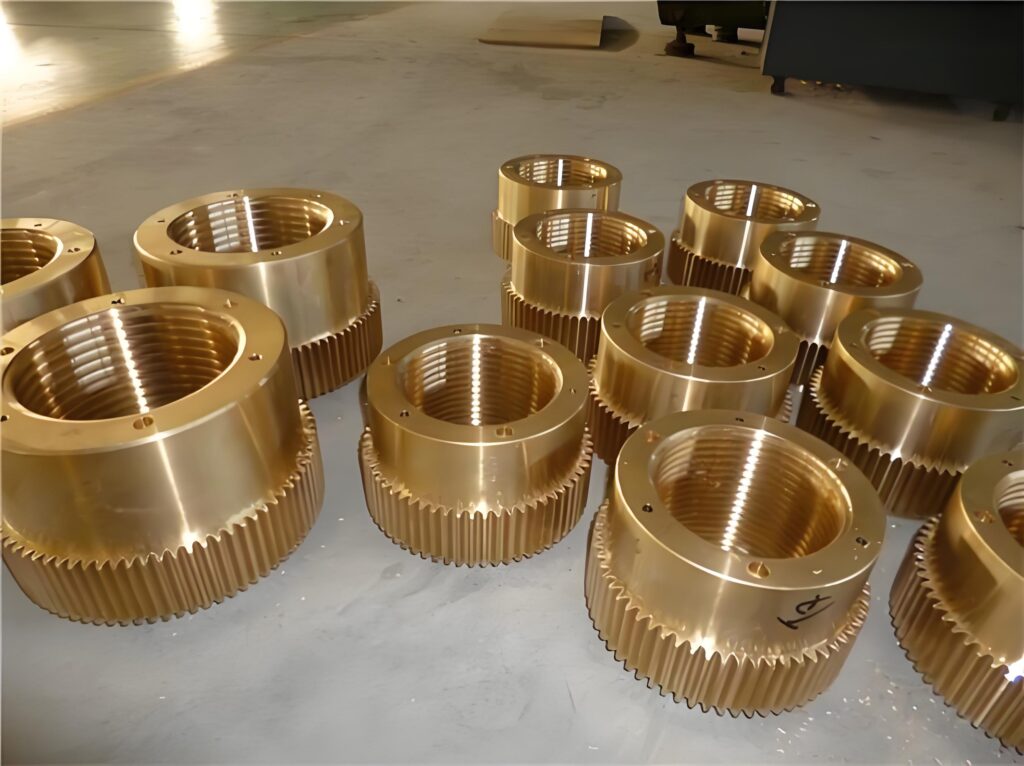
Thanks to its versatility, aluminum bronze shines in diverse industries:
Marine industry: Ship propellers, valves, offshore rig hardware, and seawater pipes (resists saltwater corrosion).
Aerospace: Landing gear bushings, engine components, and fasteners (handles high stress and temperature fluctuations).
Automotive: High-performance brake parts, pumps, and transmission gears (combines strength and wear resistance).
Manufacturing: Gears, bearings, and hydraulic components (withstands heavy loads and friction).
Electrical: Connectors and terminals (where moderate conductivity and mechanical durability are needed).
Advantages and Disadvantages of Aluminum Bronze
Advantages
- Superior corrosion resistance: Outperforms many alloys in seawater, chemicals, and high humidity.
- High strength: One of the strongest bronze alloys, suitable for heavy-duty applications.
- Wear resistance: Stands up to friction and repeated stress, reducing maintenance needs.
- Temperature tolerance: Performs well in both high and low temperatures.
- Aesthetic appeal: Its golden color makes it useful for decorative parts (e.g., architectural hardware).
Disadvantages
- Cost: More expensive than brass or steel due to alloying elements and production complexity.
- Machinability: Harder than softer alloys, requiring specialized tools to avoid wear.
- Limited conductivity: Not ideal for high-electrical-conductivity needs (use pure copper instead).
Why Choose Aluminum Bronze for Your Next Project?
Aluminum bronze is a powerhouse alloy, blending strength, corrosion resistance, and versatility to excel in demanding industries. From marine propellers to aerospace components, its unique properties make it irreplaceable in applications where durability and performance are critical.
If you’re looking to source aluminum bronze parts or need guidance on selecting the right grade for your project, our team at Precionn specializes in machining high-performance materials. Contact us today to explore how aluminum bronze can elevate your next project.