
Titanium is celebrated for its unique blend of strength, lightness, and corrosion resistance, but among its many grades, Grade 2 titanium stands out as the most versatile and widely used. Often called the “workhorse” of commercially pure (CP) titanium, it’s a staple in industries from aerospace to medicine.
In this guide, we’ll dive into what makes Grade 2 titanium special—its composition, properties, key applications, and why it’s the go-to choice for engineers and manufacturers worldwide.
What Is Grade 2 Titanium?
Grade 2 titanium is a commercially pure titanium grade (unalloyed, meaning it contains no intentional alloying elements like aluminum or vanadium). It’s the most commonly used CP titanium grade, prized for its balance of strength, ductility, and ease of fabrication.
Unlike alloyed titanium grades (e.g., Grade 5 Ti-6Al-4V), Grade 2 relies on its high purity and controlled trace elements to deliver consistent performance. Its simplicity makes it a cost-effective option for applications where extreme strength isn’t required, but corrosion resistance and formability are critical.
Chemical Composition of Grade 2 Titanium
Grade 2 titanium is over 99% pure titanium, with small amounts of trace elements that fine-tune its properties. Here’s its typical composition:
| Element | Content (Max) | Role in Properties |
| Titanium (Ti) | 98.6–99.2% | Base metal, provides core strength and corrosion resistance. |
| Oxygen (O) | 0.18% | Enhances strength (higher oxygen = slightly stronger, but less ductile). |
| Iron (Fe) | 0.30% | Improves strength and workability without harming corrosion resistance. |
| Carbon (C) | 0.08% | Minimizes brittleness (kept low to maintain ductility). |
| Nitrogen (N) | 0.03% | Controls strength (excess can reduce formability). |
| Hydrogen (H) | 0.02% | Prevents embrittlement (critical for durability in high-humidity environments). |
These trace elements are tightly controlled to ensure Grade 2 retains its key traits: excellent corrosion resistance, formability, and biocompatibility.
Properties of Grade 2 Titanium
Grade 2 titanium’s appeal lies in its unique combination of physical and mechanical properties. Let’s break them down:
Physical Properties
- Density: 4.51 g/cm³ (45% lighter than steel, 60% heavier than aluminum) Makes it ideal for weight-sensitive applications like aircraft parts or sports equipment.
- Melting Point: 1,668°C (3,034°F) Withstands high temperatures, suitable for exhaust systems or industrial furnaces.
- Corrosion Resistance: Exceptional Forms a protective oxide layer (TiO₂) that self-heals, resisting corrosion in seawater, acids (e.g., sulfuric acid), and chlorine. Outperforms stainless steel in harsh environments.
- Thermal Conductivity: Low (17 W/m·K) Slows heat transfer, useful for insulation in certain industrial tools but a drawback in heat-dissipation applications.
- Electrical Conductivity: Low Unsuitable for electrical components but ideal for shielding sensitive electronics from interference.
- Non-Magnetic: Doesn’t interact with magnetic fields Critical for medical devices (e.g., MRI-compatible implants) and aerospace avionics.
Mechanical Properties
- Tensile Strength: 345–550 MPa Strong enough for structural roles (e.g., pressure vessels) but less rigid than alloyed grades like Grade 5.
- Yield Strength: ~275 MPa Resists permanent deformation under stress, making it reliable for load-bearing parts.
- Elongation: 20–30% Highly ductile—can be bent, rolled, or drawn into thin sheets/wires without cracking (key for manufacturing complex shapes).
- Hardness: 160 Brinell Softer than alloyed titanium grades but harder than pure aluminum, balancing wear resistance and workability.
- Weldability: Excellent Can be welded using TIG or plasma arc methods (with proper shielding to avoid contamination), unlike some brittle metals.
Grade 2 vs. Other Titanium Grades: How They Compare
Choosing between titanium grades depends on your application’s needs. Here’s how Grade 2 stacks up against two popular alternatives:
Grade 2 vs. Grade 5 (Ti-6Al-4V)
Grade 5 is the most widely used titanium alloy, prized for its strength. Here’s the key differences:
| Feature | Grade 2 (CP Titanium) | Grade 5 (Ti-6Al-4V) |
| Composition | 99% Ti (no alloying elements) | 90% Ti + 6% Al + 4% V |
| Tensile Strength | 345–550 MPa | 900–1,200 MPa (2–3x stronger) |
| Density | 4.51 g/cm³ | 4.43 g/cm³ (slightly lighter) |
| Corrosion Resistance | Superior in seawater/ acids | Excellent but less than Grade 2 |
| Formability | Highly ductile (easy to shape) | Less ductile (harder to form) |
| Biocompatibility | Excellent (used in implants) | Good (ELI variant used for implants) |
| Cost | Lower (simpler production) | Higher (alloying adds complexity) |
| Best For | Corrosion-resistant parts, medical implants, marine equipment | High-stress parts (aircraft engines, structural components) |
Grade 2 vs. Grade 4 (CP Titanium)
Grade 4 is another CP titanium grade, but with higher strength (thanks to more oxygen). Here’s how they compare:
| Feature | Grade 2 | Grade 4 |
| Oxygen Content | 0.18% max (lower) | 0.40% max (higher) |
| Tensile Strength | 345–550 MPa | 550–700 MPa (stronger) |
| Ductility | Higher (20–30% elongation) | Lower (15–20% elongation) |
| Machinability | Easier (softer, less tool wear) | Harder (more tool wear, prone to cracking) |
| Corrosion Resistance | Slightly better in acids/seawater | Very good (similar to Grade 2) |
| Cost | Similar (both CP grades) | Similar |
| Best For | Formable parts (pipes, sheets), medical implants | High-strength CP applications (offshore rigs, aerospace |
Applications: Where Grade 2 Titanium Shines
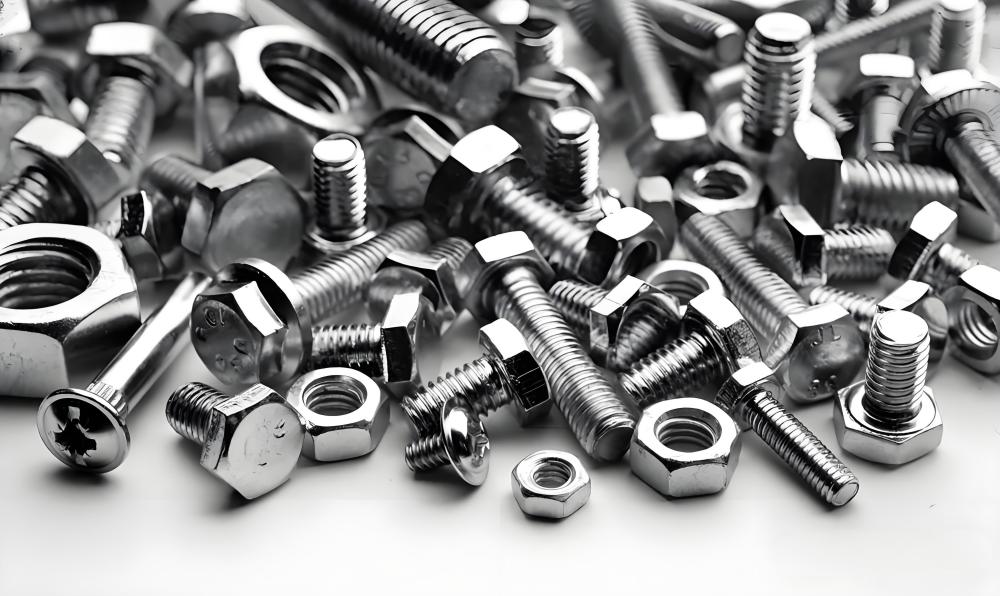
Grade 2 titanium’s versatility makes it indispensable across industries. Here are its top uses:
- Aerospace & Aviation
- Aircraft Components: Fuselage panels, hydraulic lines, and fasteners—its low weight reduces fuel consumption, while corrosion resistance withstands high-altitude moisture.
- Helicopter Parts: Rotor assemblies and structural brackets, where ductility prevents cracking under vibration.
- Medical & Dental
- Implants: Dental implants, pacemaker casings, and bone screws—biocompatible (body doesn’t reject it) and non-toxic. Its ductility allows custom shaping for patient-specific needs.
- Surgical Tools: Scalpels and forceps—resists corrosion from sterilization chemicals (e.g., autoclaves) and stays sharp longer than stainless steel.
- Chemical Processing
- Equipment: Heat exchangers, reactor vessels, and pipes—resists acids (e.g., hydrochloric, sulfuric), chlorine, and industrial solvents. Outlasts stainless steel in aggressive environments.
- Storage Tanks: For corrosive fluids like fertilizers or pharmaceuticals, where leaks could be catastrophic.
- Marine Engineering
- Underwater Parts: Propellers, hull fittings, and seawater intake systems—resists saltwater corrosion (unlike steel, which rusts, or aluminum, which pitting).
- Offshore Structures: Oil rig components and subsea pipelines, where durability in harsh marine conditions is critical.
- Automotive & Sports
- High-Performance Vehicles: Exhaust systems (withstands 600–800°C exhaust heat) and suspension parts (reduces unsprung weight for better handling).
- Sports Gear: Bicycle frames (lightweight yet stiff), golf club heads (improves swing speed), and scuba tanks (corrosion-resistant for saltwater dives).
Advantages & Limitations of Grade 2 Titanium
Advantages
- Corrosion Resistance: Outperforms most metals in seawater, acids, and industrial chemicals.
- Strength-to-Weight Ratio: Stronger than aluminum, lighter than steel—ideal for weight-sensitive designs.
- Formability: Easy to machine, weld, and shape into complex parts (unlike brittle high-strength alloys).
- Biocompatibility: Safe for long-term use in the human body (no allergic reactions).
- Cost-Effective: Cheaper than alloyed titanium grades (e.g., Grade 5) while retaining key properties.
Limitations
- Lower Strength Than Alloys: Not suitable for ultra-high-stress applications (e.g., jet engine turbines)—use Grade 5 instead.
- Higher Cost Than Steel/Aluminum: Titanium’s extraction process (Kroll method) makes it pricier, though its longevity often offsets the cost.
- Machining Challenges: Generates high heat during cutting, requiring specialized tools (carbide) and coolants to avoid tool wear.
Conclusion
Grade 2 titanium’s blend of purity, corrosion resistance, and workability makes it the most versatile commercially pure titanium grade. From keeping aircraft light to ensuring medical implants last a lifetime, it’s a material that delivers reliability across industries.
At Precionn, we specialize in machining Grade 2 titanium to precise specifications—whether you need thin sheets for aerospace, custom implants for medical use, or corrosion-resistant pipes for chemical processing. Our expertise in handling titanium’s unique properties ensures your parts meet the highest standards of quality and performance.
Ready to leverage Grade 2 titanium for your project? Contact our team to discuss your needs and get a tailored solution.