
In modern engineering, material selection often determines the success or failure of a product. Among the many advanced plastics available today, Polyetheretherketone (PEEK) has become a standout choice for industries requiring reliability under extreme conditions. This high-performance thermoplastic has gained a reputation for combining mechanical strength, chemical stability, and thermal resistance in one lightweight package.
PEEK has carved its niche in aerospace, automotive, electronics, and medical manufacturing, where even the smallest component must withstand pressure, wear, and temperature without compromising performance. Beyond its strength, its versatility in machining and processing makes it especially attractive to manufacturers looking to replace metals or traditional plastics with something more durable and efficient.
What is Polyetheretherketone?
Polyetheretherketone is a semi-crystalline thermoplastic polymer developed in the late 20th century. Belonging to the polyaryletherketone (PAEK) family, it was engineered to endure extreme conditions while maintaining stability. Unlike commodity plastics such as polyethylene or polypropylene, PEEK offers advanced performance in environments where exposure to chemicals, heat, or mechanical stress is routine.
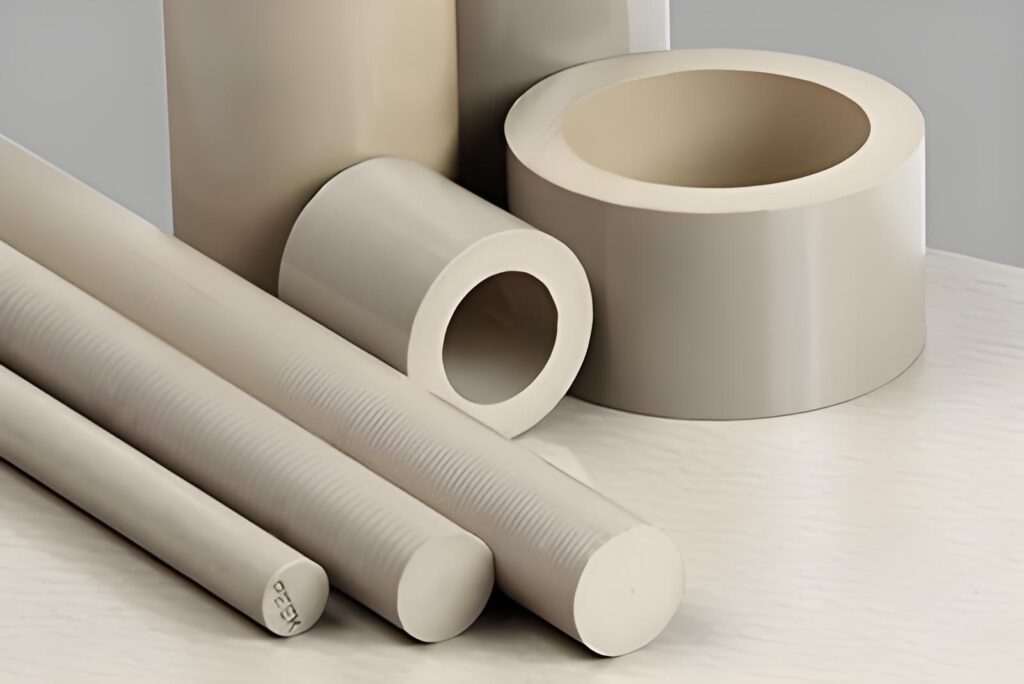
The polymer’s ability to operate continuously at temperatures up to 250°C, coupled with its resistance to solvents, oils, and radiation, makes it indispensable in sectors where reliability is critical. In short, PEEK bridges the gap between metals and traditional plastics, offering engineers the strength of one with the lightness of the other.
Properties of Polyetheretherketone (PEEK)
Mechanical properties
PEEK is celebrated for its mechanical resilience. Its tensile strength typically falls within 90–100 MPa, providing outstanding load-bearing capacity. The material also exhibits excellent fatigue resistance, meaning components can perform consistently under repeated stress.
For applications requiring higher stiffness, PEEK can be reinforced with fibers. Carbon-fiber-reinforced grades, for example, provide increased rigidity and reduced creep under long-term loads, while glass-fiber-filled grades deliver dimensional stability in precision parts.
Physical properties
From a physical standpoint, PEEK offers thermal endurance, chemical resistance, and dimensional accuracy. It remains stable at elevated temperatures and shows minimal expansion when exposed to heat. Its flame-retardant nature and low smoke emission enhance its safety profile in aerospace and transportation industries.
Moisture absorption is extremely low, ensuring consistent performance in humid or wet environments. These physical attributes allow PEEK to perform in settings where many engineering plastics would degrade or lose their shape
What are Types of Polyetheretherketone?
Different formulations of PEEK are available to meet specific industry requirements:
Unfilled PEEK
Pure polymer offering a balance of toughness, wear resistance, and biocompatibility. Commonly used in surgical tools, implants, and food contact applications.
Glass-Fiber Reinforced PEEK
With added glass fibers, this grade offers enhanced rigidity and stability, suitable for automotive parts, pump housings, and electronic connectors.
Carbon-Fiber Reinforced PEEK
Infused with carbon fiber, it delivers maximum strength, wear resistance, and thermal conductivity, making it a preferred choice in aerospace components and high-load bearings.
Lubricated or Composite PEEK
Blends containing PTFE, graphite, or other lubricants provide excellent wear and friction properties, ideal for seals, valves, and sliding parts.
This variety ensures that engineers and designers can choose the grade best suited to their project without compromising performance.
Applications of Polyetheretherketone (PEEK)
Polyetheretherketone is recognized not only for its impressive set of properties but also for the wide range of practical applications across industries. Its combination of strength, heat resistance, and chemical durability allows it to replace metals and traditional plastics in demanding environments where reliability is critical.
Aerospace and Defense
In aerospace, reducing weight without compromising safety is a top priority. PEEK components such as brackets, cable insulation, fasteners, and structural parts help achieve this balance. Its low smoke emission and inherent flame resistance make it especially suitable for aircraft interiors and defense systems where fire safety standards are strict.
Automotive and Transportation
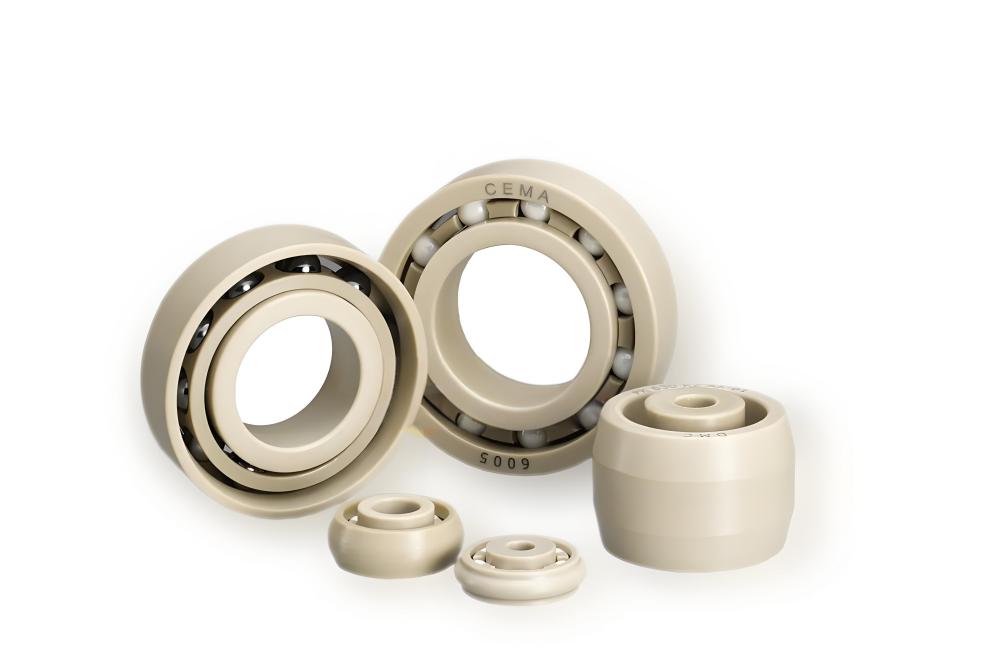
Automotive manufacturers turn to PEEK for under-the-hood components including seals, bearings, gears, and connectors. The material withstands long-term exposure to fuels, lubricants, and high operating temperatures. As electric vehicles gain ground, PEEK is increasingly used for thermal and electrical insulation in battery systems and electronic modules.
Medical and Healthcare
PEEK’s biocompatibility makes it ideal for healthcare applications. It is widely used in spinal implants, dental prosthetics, and surgical instruments. Unlike metals, PEEK does not interfere with MRI or CT scans, allowing doctors to monitor patients more accurately. Its resistance to repeated sterilization ensures safety and durability in surgical settings.
Electronics and Electrical Engineering
In electronics, PEEK is chosen for its excellent electrical insulation and stability under thermal stress. It is used in circuit boards, connectors, insulating films, and high-frequency cable sheathing. These applications ensure long-term reliability in telecommunications, consumer devices, and industrial machinery.
Oil, Gas, and Energy
Energy sectors rely on PEEK where corrosion resistance and durability under pressure are vital. Components such as valve seats, compressor parts, seals, and pipeline fittings are often manufactured from PEEK. Its ability to withstand aggressive fluids and extreme temperatures makes it indispensable for exploration and refining operations.
Industrial and General Engineering
In broader engineering fields, PEEK’s low wear and friction properties are highly valued. It is used in bushings, sliding elements, and precision parts in robotics, automation, and manufacturing equipment. Its long service life reduces downtime and maintenance costs, adding efficiency to industrial processes.
Advantages and Disadvantages of PEEK
Advantages
- Outstanding strength-to-weight ratio compared to metals
- Ability to function at high operating temperatures without losing integrity
- Resistance to aggressive chemicals including fuels, lubricants, and acids
- Biocompatibility, making it suitable for surgical and dental implants
- Excellent wear resistance and low friction in sliding applications
- Dimensional stability across varied environments
Disadvantages
- Higher material cost compared to standard plastics
- Requires specialized equipment for molding and machining
- Less readily available than common engineering polymers
- Processing demands, such as high melt temperatures, add to production complexity
Despite its limitations, the long service life and reduced maintenance often offset the initial investment, making PEEK a cost-effective solution for critical applications.
Machining and Processing Considerations
Processing PEEK demands precision.
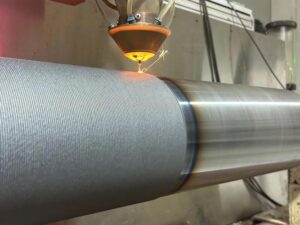
- Machining: PEEK machines similarly to metals. Sharp tools, controlled speeds, and cooling are essential to avoid stress cracking or surface defects.
- Injection molding: Requires melt temperatures in the range of 360–400°C. Proper mold design is crucial to accommodate crystallization and shrinkage.
- Extrusion: Produces sheets, rods, and tubes that can later be machined into custom parts.
- Additive manufacturing: Advanced 3D printing technologies now allow PEEK to be shaped into complex geometries, offering rapid prototyping opportunities in aerospace and medical device development.
When handled with care, PEEK components deliver long-lasting performance and meet the strict standards of industries such as aviation, energy, and healthcare.
Conclusion
Polyetheretherketone has proven itself as more than just another plastic. Its combination of mechanical strength, chemical resistance, and heat tolerance has positioned it as one of the most valuable materials for modern engineering. Whether in jet engines, surgical implants, or automotive transmissions, PEEK continues to redefine what is possible with polymer technology.
For organizations seeking precision machining solutions with PEEK and other high-performance polymers, Precionn provides the expertise to deliver. With extensive industry knowledge and a dedication to quality, Precionn supports international clients with tailored components that meet the highest standards in durability and performance.